
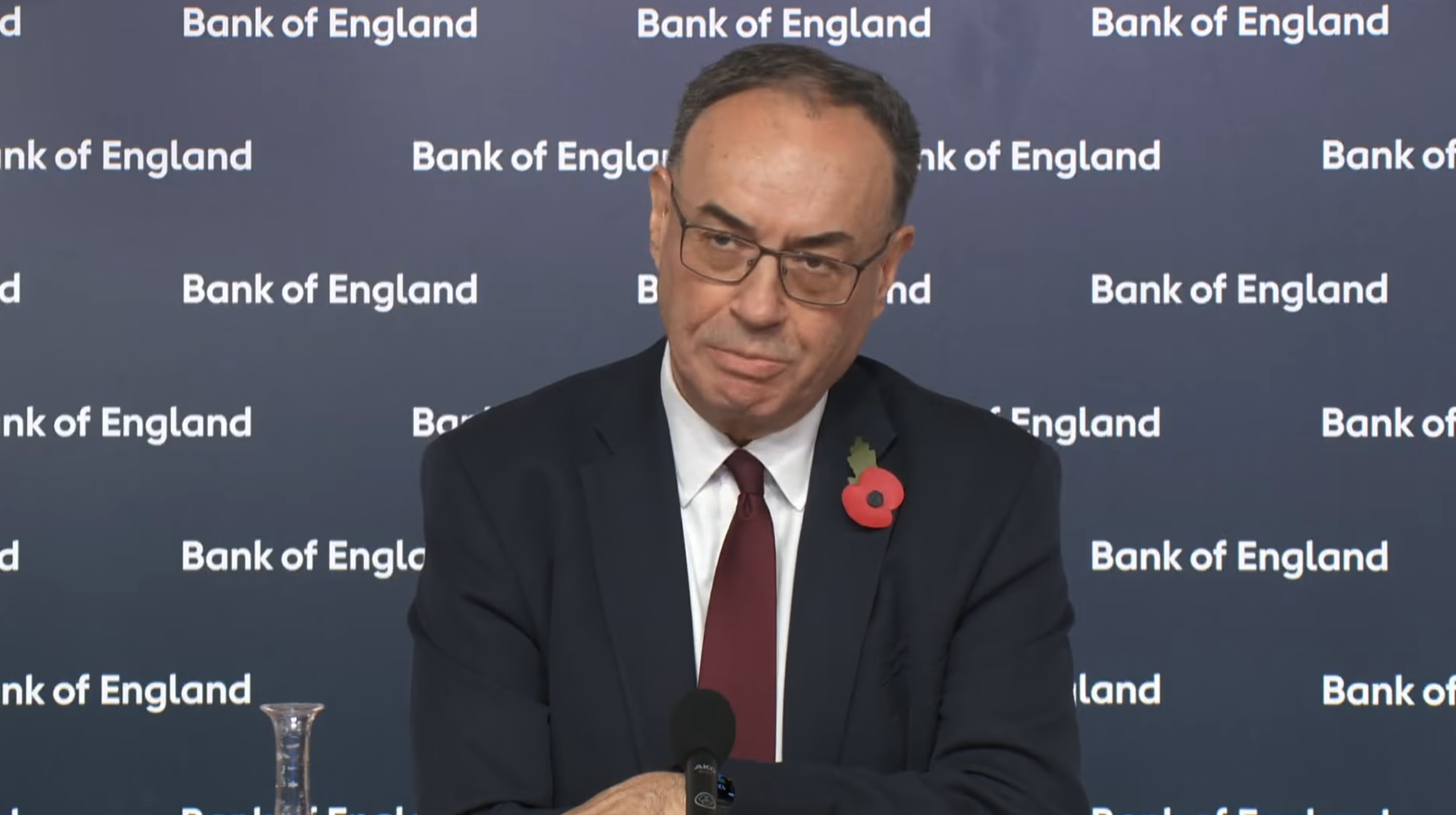
The Bank of England has raised interest rates by 0.25 percentage points to 4%, the first increase since August 2023.
At its meeting on 5 November 2026, the Monetary Policy Committee (MPC) voted by a majority of 8-1 to increase rates by 0.25 percentage points, with one member voting for a 0.5% increase.
The rise follows six consecutive meetings that held rates at 3.75%. In September, three of the nine committee members had already voted for an increase, and the Bank warned that policy “may have to tighten” if the conflict in the Middle East went on, which it has.
Why rates went up
The Bank pointed to inflation as the main reason for the rise, warning that it could reach as high as 5% by the middle of next year.
The Bank says the conflict in the Middle East is the key factor driving increases, saying:
“The conflict in the Middle East is now in its ninth month. Global energy prices have continued to rise from an already elevated level. UK CPI inflation increased to 3.5% in September.
It is now expected to rise to around 5% by the middle of next year. It is then projected to fall as the impact of rising energy prices on 12-month inflation rates fades, and still restrictive monetary policy bears down on inflation.”
Talking about energy prices, the Bank said the “duration and scale” of price increases had driven today’s decision, generating sufficient inflationary pressure to warrant an increase.
On what comes next, Governor Andrew Bailey suggested rates could rise again unless the conflict in the Middle East ends. Speaking at a press conference, he said:
“Today’s increase should not be seen as the first in an inevitable long sequence of hikes. That is not inevitable.
But unless the conflict in the Middle East is resolved, neither does it seem likely to be the last increase.”

What does this mean for landlords?
For most landlords, very little will change.
Fixed mortgage rates are priced on what the markets expect to happen, and they’ve been expecting this for months. So today’s rate rise is already baked in.
If you’re on a tracker, you’ll feel it straight away. But the pain should be minimal. On a £150,000 interest-only loan, a 0.25% rise adds about £31 a month.
Either way, your to-do list hasn’t changed.
Stress-test your numbers against rates staying higher for longer. Speak to your broker a few months before your fix ends, because most lenders let you secure a rate months ahead and switch if something cheaper comes along. And if you see a rate you like, grab it before the lender pulls it.
There’ll be plenty of doom and gloom over the next few days. But it’s worth remembering this isn’t out of the ordinary. And though they’re a long way from the cheap borrowing we saw a decade ago, rates of 4% are close to the long-term average.
We’ve been doing this for 13 years now, through Brexit, Covid, the tax changes, the mini-Budget and Renters’ Rights Act. Each of them came with a perfectly good reason to wait, and each would have cost you money if you had. In our opinion, this recent rate rise is no different.