

Tenants have been urged to “flood” tribunals with challenges against landlords who attempt to raise their rent, even if the change is reasonable.
Tenants’ unions in Oxford, London, and Manchester are telling their members to “resist on principle…because landlords simply do not need and do not deserve another pay rise by leeching off of our hard work.”
Posting on its website, the Oxford Renters Union says:
“By challenging a rent increase at the ‘Rent Tribunal’ you can fight to keep your rent lower…Our goal is to freeze rents and lower the market rate for all Oxford renters.”
A weakness in the system
The logic is simple enough.
Since the Renters’ Rights Act arrived in May, a tenant can refer a Section 13 rent increase to the First-tier Tribunal for the measly sum of just £47. On top of that, the new rent is frozen until the tribunal decides the case, and it can’t be backdated even if the landlord is successful.
The tribunal also can’t set the rent any higher than the figure on your notice. So a tenant who loses still pays the old rent for a few extra months, and the only thing they risk is the fee.
It’s essentially a bargain-basement rent freeze.
And the unions believe that the more people do it, the more gummed up the system will become.
“Even if your appeal is unsuccessful, you delay the rent increase until the tribunal’s decision, with current estimates for this at 5-6 months from the date of appeal,” the Oxford union website states. “The more people that take cases to the tribunal, the slower it will be for everyone, and the longer you will pay the lower rent.”

Will tribunals grind to a halt?
They’re certainly busier.
Hamptons found tribunals made 166 market rent decisions in July, almost four times the 44 they made in the same month last year. June was a similar story, with 129 decisions against a pre-May average of 42 a month.
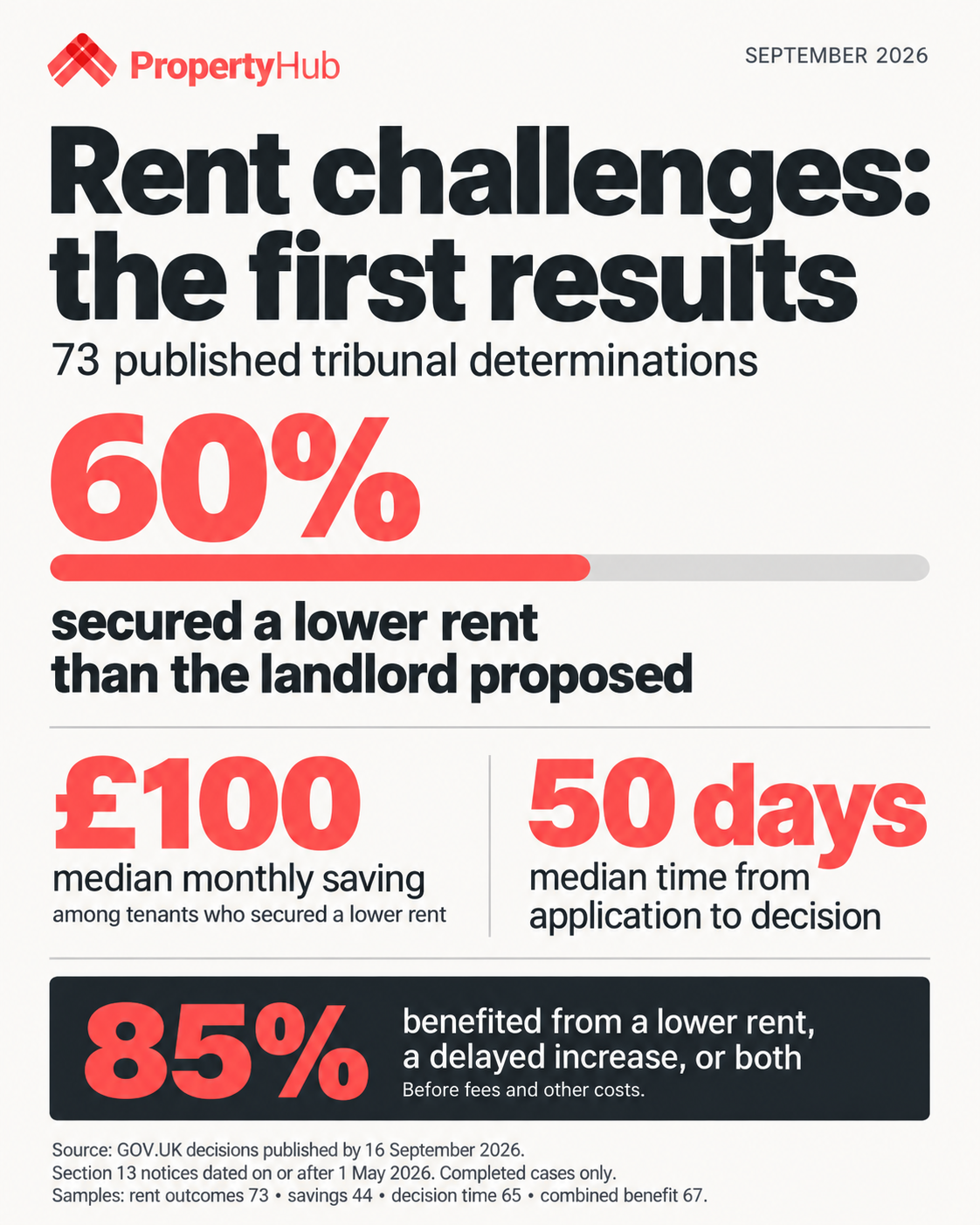
So far, though, the system is coping better than the campaigners suggest. Earlier this year, we analysed every Section 13 decision published since the Renters’ Rights Act took effect. The median time from a tenant applying to getting a decision was 50 days.
That’s a long way short of the five to six months the renters’ unions are quoting. The caveat is that those cases came from the first few months, before the unions started rallying their members. If the “flood” does arrive, waiting times will stretch.
What will this cost you?
Say you serve notice for an extra £75 a month. If your tenant leaves it to the last minute to apply for tribunal, that’s about £125 you won’t get back even if they find in your favour. If the unions are right and cases start taking five to six months, it’s closer to £400.
A delay is just one of the risks landlords face, however.
Only 40% of the landlords in our analysis got their full increase, and the bigger the increase, the less likely they were to get it.
One Manchester landlord learned this the hard way. They asked for an extra £50 a month, and the tribunal cut the rent by £200 instead (presumably not the number they’d pencilled into their spreadsheet).
That’s an extreme case, but it shows how expensive a badly priced increase can get.
What can you do?
When we dug into the tribunal decisions, the one thing the successful landlords had in common was effort. They’d all built a case before serving notice, while the ones who lost had mostly fired off a Section 13 and hoped for the best.
So start with evidence.
Find what similar properties nearby have let for, keep it on file, and make sure your figure sits comfortably inside it. If you can price slightly below the going rate, even better: your tenant has less reason to challenge, and more reason to stay.
Next, think little and often.
Plenty of landlords hold the rent for years to keep the peace, then try to catch up in one go when costs bite. Under the new rules, that’s the increase most likely to end up at tribunal, and the one a tribunal is most likely to trim. Smaller annual rises are far easier to defend.
Finally, talk to your tenant before the paperwork arrives. If the first they hear of an increase is a legal notice on the doormat, a tribunal can feel like their only option. Raise it informally, explain your reasoning, and let the Section 13 be the formal confirmation of something you’ve already discussed.
And remember, budget for a delay. If a challenge is already in your cash flow forecast, a couple of months at the old rent stays an annoyance.
Planning a rent increase? We’ve put together a free guide that walks you through the Section 13 process step by step.
Our view

We can’t blame tenants for taking a risk-free bet on their rent. If someone offered us a few months of cheaper rent for £47, we’d be tempted too. And the tribunal route exists for a good reason: to stop landlords using huge increases as a backdoor eviction.
But a campaign to clog it up helps nobody.
Every speculative case pushes back the tenants with a legitimate grievance. And every landlord stung by a delay has one more reason to sell up, which means fewer homes to rent and higher rents for the people still looking.
For landlords, our advice is the same as it was the day the Act arrived. Price your increase on evidence, keep it modest, talk to your tenant first, and assume it might be challenged. Do that, and the worst a “resist on principle” tenant can do is make you wait a few weeks for money you’ll get anyway.
Irritating, yes, but hardly worth losing sleep over.